Prince William and Kate Middleton are known as ‘staggeringly out of touch’ by animal rights organisation PETA following a recent picture with their dog’s puppies.
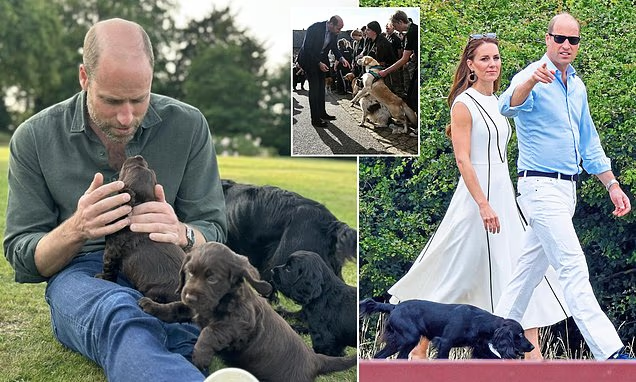
Last week, the Princess of Wales posted a sweet snap of her husband sitting on a field with their English Cocker Spaniel, Orla, and three of the dog’s puppies.
The little pups were seemingly born in May, and William’s birthday portrait is the first look royal fans have at the sweet animals.
Alongside the Instagram photo, Kate wrote in the caption: “Happy birthday! Love C, G, C, L, Orla and the puppies!”
Other users commented: “My heart just exploded. Happy Birthday!” and: “What a joyful photo. Happy birthday to HRH Prince William.”
However, not everyone was as infatuated with the photo, as PETA has declared a cruel statement criticising the couple.
The organisation announced a statement charging them of ‘churning out a litter’ instead of adopting.
PETA’s Vice President of Programmes Elisa Allen said: “The Prince and Princess of Wales should know that shelters here and worldwide are overflowing with puppies desperate for a second chance at a loving home and that churning out a litter in the midst of this animal homelessness crisis is staggeringly out of touch.
“If William is going to lead, he might well take a lesson from King Charles III and Queen Camilla, who have chosen to adopt from a shelter rather than contribute to the problem.”
The couple, who are yet to openly answer to the comments, welcomed Orla into their family back in 2020 after their first dog Lupo unpredictely passed away.
Lupo had been given as a wedding gift to the couple from The Princess of Wales’ brother, James Middleton.
It’s unknown how many of Orla’s pups the Prince and Princess of Wales plan to keep, although some reports recommend it could be just one.
Elsewhere, The King and Camilla chose to adopt back in February, which was referred to PETA in their statement.
They approved a Jack Russell terrier called Moley, four months after losing their last beloved rescue pup, Beth, who was adopted in 2011.
They shared: “We’re pleased to confirm that Battersea has recently rehomed an 8-week-old Jack Russell terrier cross female puppy, called Moley, to our Patron, Her Majesty The Queen.
“The Queen has long been a supporter of Battersea’s work and has previously rehomed two rescue dogs from our charity.”
Prince William and Kate Middleton Face Criticism From PETA Over Their Dog’s Puppies as Debate About Pet Adoption Grows
The photograph of Prince William sitting in a field with his beloved dog Orla and three adorable puppies was intended to be a heartwarming glimpse into the private life of the royal family. Shared by Catherine, Princess of Wales, as part of a birthday tribute to William, the image quickly attracted attention from royal supporters, who praised the family moment and expressed their affection for the young puppies.
However, the sweet photograph also sparked criticism from animal rights organisation PETA, which used the opportunity to raise concerns about dog breeding and the number of animals waiting for homes in shelters.
The controversy highlights a broader debate that has been taking place among animal lovers for years: should families looking for a new pet consider adopting an animal from a shelter rather than purchasing or breeding puppies?
A Family Photograph That Captured Royal Fans’ Attention
The photograph showed Prince William relaxing outdoors alongside Orla, the English Cocker Spaniel who has been part of the family since 2020. Three small puppies could also be seen in the image, giving royal followers a rare glimpse into the family’s life with their pets.
Catherine’s caption was simple and affectionate.
“Happy birthday! Love C, G, C, L, Orla and the puppies!”
The initials are understood to refer to Catherine and the couple’s children, Prince George, Princess Charlotte and Prince Louis.
The photograph offered a different side of the future king. Away from official engagements, public speeches and ceremonial duties, William appeared to be enjoying a quiet family moment surrounded by the people and animals closest to him.
Many followers responded warmly.
Some described the photograph as one of the most touching birthday tributes the Princess of Wales had shared. Others focused on the puppies, with several commenters expressing excitement about seeing more pictures of the growing dogs.
For royal watchers, the image was also a reminder that the Prince and Princess of Wales continue to maintain a degree of privacy around their family life. Although their public responsibilities attract worldwide attention, they occasionally share personal photographs that reveal their interests and everyday routines.
This particular photograph, however, soon became the subject of a wider conversation.
PETA Questions the Decision to Breed Orla
PETA, an animal rights organisation known for its criticism of commercial animal breeding and its advocacy for shelter adoption, responded to the photograph with a statement directed at William and Catherine.
Elisa Allen, PETA’s Vice President of Programmes, argued that the couple could have used their position to draw attention to the needs of homeless animals.
“The Prince and Princess of Wales should know that shelters here and worldwide are overflowing with puppies desperate for a second chance at a loving home,” Allen said, according to the statement.
She described the decision to produce a litter as “staggeringly out of touch” during what she characterised as an animal homelessness crisis.
PETA also referred to King Charles III and Queen Camilla, noting that the Queen had adopted rescue dogs through Battersea, the animal welfare charity with which she has a longstanding connection.
The organisation’s comments were not simply about one photograph. They reflected PETA’s broader position that people should consider adoption before bringing a new animal into their homes.
PETA has frequently campaigned against the commercial breeding industry, irresponsible pet ownership and the abandonment of animals. The organisation argues that the demand for purpose-bred puppies can contribute to the difficulties faced by animals in shelters.
However, the wider issue of dog breeding is more complex than a single photograph might suggest.
Not every litter is produced for commercial purposes, and not every person who breeds a dog contributes directly to shelter overcrowding. Responsible breeders may undertake health testing, carefully plan litters and ensure that puppies have suitable homes.
At the same time, animal welfare organisations emphasise that prospective owners should consider the large number of dogs already in need of permanent families.
These differing perspectives have helped fuel the discussion surrounding Orla’s puppies.
The Story Behind Orla’s Place in the Royal Family
Orla became part of the Prince and Princess of Wales’ family in 2020, following the death of their previous dog, Lupo.
Lupo was a black English Cocker Spaniel who had a special connection to the couple. He was given to William and Catherine as a wedding gift by Catherine’s brother, James Middleton.
For years, Lupo was a familiar part of the family’s private life. He occasionally appeared in photographs and was known to have been especially important to Catherine.
When Lupo died in November 2020, the Princess of Wales shared a message remembering him as a beloved companion.
The loss was deeply personal for the family, and Orla subsequently became an important presence in their lives.
English Cocker Spaniels are known for their affectionate nature, intelligence and energetic personalities. They generally require regular exercise, attention and companionship, making them dogs that often thrive in active households.
Orla’s arrival gave the family a new four-legged companion after the loss of Lupo.
Although the royal family rarely discusses the details of their pets’ private lives, Orla has occasionally appeared in family photographs, including images connected to important celebrations.
The recent picture of William with the puppies therefore attracted attention not only because of the animals themselves but also because of the affection the family has shown toward their pets over the years.
Questions About the Puppies’ Future
Following the release of the photograph, royal followers began asking questions about the puppies.
How many puppies were born? Would the family keep all of them? And would the animals eventually be placed with other families?
The photograph appeared to show three puppies, but the precise size of the litter has not been publicly established in the information surrounding the controversy.
There has also been speculation in some reports that the Prince and Princess of Wales may keep one of the puppies. However, the family’s final decision regarding the animals has not been clearly confirmed.
For dog owners, raising a litter involves considerable responsibility.
Puppies require veterinary care, vaccinations, proper nutrition and early socialisation. They also need secure, permanent homes where their physical and emotional needs can be met.
If some of Orla’s puppies are eventually placed with other families, the process would ordinarily involve finding owners capable of caring for the dogs throughout their lives.
Responsible pet ownership is particularly important with breeds such as the English Cocker Spaniel, which can require substantial daily exercise and mental stimulation.
The royal family’s resources and private circumstances may differ from those of many ordinary households, but the basic responsibilities of caring for a dog remain the same.
As of the information available in the original report, the family had not publicly responded to PETA’s criticism or provided a detailed explanation of its plans for the puppies.
King Charles and Queen Camilla’s Rescue Dog Receives Attention
PETA’s statement also drew attention to the decision by Queen Camilla to adopt a rescue dog through Battersea.
In February, it was announced that the Queen had welcomed a Jack Russell Terrier cross puppy named Moley.
The announcement came several months after the death of Beth, a rescue dog who had been part of the Queen’s life for many years.
Beth had been adopted from Battersea in 2011 and was widely associated with Queen Camilla’s love of dogs.
The Queen has maintained a longstanding relationship with the animal welfare charity. Her support for Battersea has included public advocacy for the organisation’s work to find homes for abandoned and unwanted animals.
Battersea confirmed Moley’s rehoming in a statement.
The organisation explained that the eight-week-old female puppy had been placed with the Queen and noted Camilla’s previous adoption of rescue dogs from the charity.
Moley’s arrival was welcomed by many animal lovers, who viewed the story as another example of a public figure choosing to provide a home to an animal in need.
For PETA, the contrast between the two royal households offered an opportunity to promote its adoption message.
Nevertheless, the two situations involve different circumstances. Queen Camilla’s adoption of Moley and the birth of Orla’s puppies are separate family decisions, and the public has limited information about the circumstances surrounding the puppies’ arrival.
Why the Adoption Debate Continues
The controversy surrounding Orla’s puppies reflects a much larger issue affecting animal welfare organisations around the world.
Every year, animal shelters care for dogs and cats that have been abandoned, surrendered or rescued from difficult conditions. Some animals remain in shelters for extended periods, while others are transferred to foster homes or adopted by new families.
The causes of shelter overcrowding vary.
They can include unplanned litters, the cost of veterinary treatment, housing restrictions, changes in family circumstances and a lack of access to affordable sterilisation services.
Animal welfare groups often encourage prospective pet owners to visit shelters before turning to breeders or pet shops.
Adoption can give an abandoned animal another opportunity to live in a safe and loving home. However, shelters may not always have the specific breed, age or temperament that a family is seeking.
Some people choose responsible breeders because they want a particular breed or because they have specific needs related to the dog’s size, temperament or activity level.
Animal welfare experts commonly stress the importance of researching breeders carefully, checking health records and ensuring that the welfare of the parent animals and puppies is prioritised.
The debate is therefore not simply about whether one choice is universally suitable for every family. It is also about the responsibilities that come with bringing an animal into the world or adopting an existing pet.
For organisations such as PETA, reducing the number of unwanted animals is a central priority.
For responsible breeders and many dog owners, ethical breeding and proper lifelong care are also important parts of animal welfare.
The Royal Family and Their Relationship With Animals
Animals have long played a role in the private and public lives of members of the British royal family.
Queen Elizabeth II was famously associated with her Pembroke Welsh Corgis, a breed that became closely linked to her image over the course of her reign.
King Charles III and Queen Camilla have also demonstrated a longstanding interest in animal welfare, particularly through their support of charitable organisations.
William and Catherine have occasionally shared photographs of Orla, giving the public a glimpse into the role pets play in their household.
For members of the royal family, such personal moments can provide a welcome break from the formality of public duties.
The photograph of William surrounded by puppies may have been intended simply as a family birthday tribute rather than a statement about animal welfare or dog breeding.
Nevertheless, public figures often attract scrutiny when their private decisions intersect with causes that they are expected to understand or support.
In this case, PETA chose to focus on the broader implications of breeding dogs at a time when many animals are awaiting homes.
Whether the couple will respond to the criticism remains unknown.
What Happens Next?
For now, the puppies remain at the centre of the public’s curiosity.
Royal fans will likely continue to watch for new photographs of Orla and her young offspring, while animal welfare supporters may continue to discuss the importance of adoption and responsible breeding.
The controversy has also generated a wider conversation about the influence of public figures.
When prominent individuals share details about their pets, their choices can attract attention far beyond their immediate family circle. Animal welfare organisations may use such moments to highlight issues they believe deserve greater public awareness.
However, the long-term outcome of the debate will depend on more than a single photograph or public statement.
The most important considerations remain the welfare of the puppies, the health of their mother and the quality of the homes in which the animals will live.
For William and Catherine, the photograph appeared to be a celebration of family and a birthday message filled with affection.
For PETA, it became an opportunity to question the public example set by a future king and queen.
And for the wider public, it has reopened a familiar question: when welcoming a dog into your family, what steps can you take to ensure that your decision supports the welfare of animals?
As the royal family continues its public duties and private life, the fate of Orla’s puppies may remain a small but closely followed story among royal enthusiasts and animal lovers alike.
What do you think about PETA’s criticism of Prince William and Kate Middleton? Do you believe families should prioritise adopting rescue animals, or do you think responsible breeding also has an important place in animal welfare?