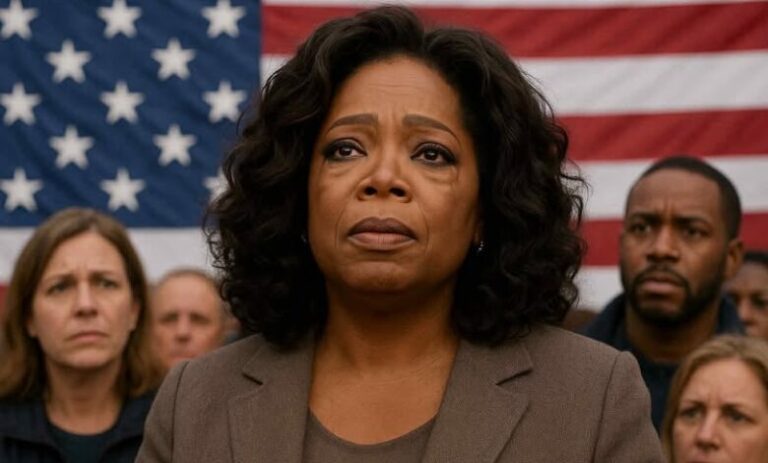
Oprah Winfrey at 72: From a Difficult Childhood to Global Media Influence
A Life Shaped by Hardship and Determination
Oprah Winfrey’s rise from a childhood marked by poverty to a position of international influence represents one of the most recognizable journeys in modern media.
In 2026, as she celebrates her 72nd year, Winfrey continues to reflect publicly on her health, career, personal choices, and the legacy she has created over several decades.
Her path began in rural Mississippi before her childhood took her to inner-city Milwaukee. Those early years included severe hardship and experiences that would continue affecting her long after she became famous.
Winfrey has spoken openly about being molested during childhood. She also experienced the loss of an infant son when she was 14 years old.
Rather than hiding every painful part of her history, she eventually incorporated those experiences into the candid communication style that helped her connect with millions of viewers.
Her willingness to discuss trauma, self-worth, personal responsibility, and recovery became central to the relationship she developed with her audience.
The Beginning of a Broadcasting Career
Winfrey’s circumstances began changing after she moved to Nashville to live with Vernon Winfrey, the man she identifies as her father.
Her communication abilities soon opened a path into broadcasting. She obtained a radio position while still attending high school and became a co-anchor on a local evening television newscast by the age of 19.
These early opportunities introduced her to the demands of live media. Her natural delivery did not always resemble the reserved style traditionally expected from news presenters, but it revealed an ability to communicate with emotional immediacy.
That quality ultimately proved especially effective in daytime television, where personal connection and spontaneous conversation could matter as much as formal presentation.
Winfrey later entered the talk-show industry and took control of a Chicago program that ranked third in its market. Under her leadership, it developed into a widely recognized television phenomenon with an audience extending far beyond the city.
Her style placed emotional honesty and direct human conversation at the center of the program. Viewers were invited to see the people on screen as individuals with complicated experiences rather than distant subjects of entertainment.
Taking Control Through Harpo Productions
The success of Winfrey’s television work enabled her to establish Harpo Productions and gain substantial control over her content.
That level of ownership was particularly significant for a Black woman working in the media industry during the 20th century. Instead of remaining only the on-screen host, Winfrey became a producer and business owner with authority over how her work was created and distributed.
By the middle of the 1990s, she had also reconsidered the direction of her television program. As tabloid-driven content became increasingly prominent, Winfrey shifted her focus toward personal development, literature, reflection, and emotional well-being.
The change helped distinguish her program from other daytime productions. It also strengthened her reputation as a host interested in long-term personal growth rather than momentary spectacle alone.
Books, meaningful interviews, and conversations about life choices became defining parts of her public identity. Her influence extended beyond individual broadcasts and helped shape how many viewers discussed private struggles in public settings.
A Direct Statement About Her Weight
In 2026, Winfrey’s health and weight-loss journey remain major subjects of public attention.
Her recent position has been summarized through a concise three-word statement:
“I’m not sorry.”
The declaration reflects her refusal to apologize for making private decisions concerning her body and health. It also challenges the long-running expectation that she must publicly justify every physical change.
For decades, Winfrey’s weight was repeatedly discussed by audiences and media outlets. Her body became part of her public story in ways that often placed personal matters under continuous scrutiny.
Her current message rejects the idea that her appearance should be treated as a public project. It also separates her present health choices from judgments about how she looked in earlier periods of her life.
The principle behind that message is straightforward: her current body is not evidence of moral success, and her former body was not a personal failure.
By speaking without apology, Winfrey has presented her weight-loss experience as an individual health decision rather than a performance designed to satisfy public expectations.
Strength and a New Personal Balance
Winfrey marked her 72nd birthday in early February 2026 while continuing to demonstrate an active approach to health.
She shared a video showing herself deadlifting, using physical strength to illustrate how her relationship with her body has changed.
The exercise represented more than a visible transformation. It reflected her emphasis on discovering a stronger and more stable way of living as she grows older.
One philosophy associated with her outlook explains that difficulties can force people to locate a different form of balance when familiar approaches no longer work.
“Challenges are gifts that force us to search for a new centre of gravity.”
This idea has remained relevant throughout Winfrey’s career. Public controversies, private struggles, business pressure, and changing expectations have repeatedly required her to reassess her direction.
Rather than describing her life as a single transformation in which every problem was permanently resolved, Winfrey has treated it as an ongoing sequence of experiences.
Each stage brought new responsibilities and demanded different forms of adaptation, from her early broadcasting work to international celebrity and media ownership.
Facing Rumors and Online Misinformation
Winfrey’s high public profile has also made her a frequent subject of misleading online content.
Claims suggesting troubling developments involving her health or family periodically circulate through attention-seeking headlines. Such stories can spread rapidly because her name is instantly recognizable to audiences around the world.
The intensity of online speculation can create confusion between verified personal updates and content designed primarily to generate clicks.
Winfrey has spent years defending her ability to describe her own life rather than allowing misleading reports to define it for her.
Her continued public activity in 2026, including the exercise video shared around her birthday, presents a very different picture from the unsupported dramatic narratives that sometimes surround her.
Misinformation is not a new challenge in her career. She has previously faced bizarre fabricated claims, including the widely circulated “9,000 penises” hoax from the early 2000s.
Incidents of that kind demonstrate how an outrageous statement can become attached to a public figure and continue circulating even when it has little connection to reality.
The Challenge of Building OWN
Winfrey has also experienced significant pressure through her business ventures, including the launch of OWN, the Oprah Winfrey Network.
Creating the network required her to move beyond the familiar structure of a successful talk show and accept responsibility for a much larger media operation.
The project brought financial and professional tension, but it also represented another stage in her development as a proprietor rather than only a television personality.
Her career had already demonstrated that ownership could provide greater creative authority. OWN expanded that principle by giving her a platform capable of supporting multiple programs and voices.
The network’s development became part of a longer record of persistence. Winfrey continued adapting even when a new venture did not immediately reproduce the success of her earlier work.
That willingness to reconsider strategy without abandoning the broader goal has remained one of the central characteristics of her professional life.
Changing the Language of Personal Storytelling
Winfrey’s cultural influence can be seen in the confessional style that now appears throughout television, interviews, podcasts, and online media.
Long before deeply personal public conversations became common across countless platforms, her television program created space for guests to discuss experiences that had often remained private.
She approached vulnerability as something capable of creating recognition between strangers. Trauma, shame, grief, family conflict, health, and self-image could be discussed as shared human experiences rather than concealed personal failures.
Winfrey reinforced that approach by speaking about her own life. Her childhood abuse, struggles with weight, professional setbacks, and private doubts became part of the dialogue she established with viewers.
This openness helped produce a powerful sense of trust. Audience members did not connect with her only because of professional success; many responded to her willingness to acknowledge the difficult experiences beneath it.
Her work demonstrated that authority and vulnerability did not have to be opposites. A person could hold significant influence while remaining honest about emotional scars and unresolved challenges.
From Talk-Show Host to Media Proprietor
Describing Winfrey only as a former talk-show host does not capture the full extent of her career.
She became a producer, business owner, network founder, interviewer, and one of the most influential figures in American media.
Her journey from Kosciusko, Mississippi, to global prominence was built through a combination of communication ability, emotional insight, strategic ownership, and continual adaptation.
Her estimated net worth of $2.8 billion represents the financial scale of that achievement. It also places her among the most prominent examples of wealth and ownership attained by a Black woman in the media industry.
Claims that 92% of audiences consider her the most trusted voice in self-improvement and wellness reflect the reputation described around her continuing influence, although her broader legacy cannot be reduced to one measurement.
Likewise, the description of her as maintaining a “100% commitment” to the “not sorry” philosophy is best understood as a statement about her current public outlook rather than a conventional statistical measure.
A Legacy Built on Personal Authority
At 72, Winfrey remains associated with the belief that people can examine their past without allowing it to determine every part of their future.
Her early hardships did not disappear when success arrived. Instead, they became part of the perspective that shaped her interviews, programming choices, public conversations, and business decisions.
She created an audience relationship by discussing subjects that many people had been taught to hide. That approach gave viewers permission to recognize their own experiences in conversations taking place on television.
Her recent health message continues the same pattern. By refusing to apologize for her choices, she asserts control over a story that has frequently been interpreted by strangers.
The larger meaning of her career lies in that sustained determination to define herself. She moved from poverty and childhood trauma into broadcasting, transformed a struggling television program, secured ownership through Harpo Productions, and expanded her influence through additional media ventures.
Online rumors may continue to generate dramatic claims, but they do not replace the visible record of her work or her own account of her life.
Winfrey’s story in 2026 is therefore not centered on one final reinvention. It is the continuing story of a woman evaluating her experiences, protecting her voice, and choosing how the next part of her public and private life will be told.
For Oprah Winfrey, reaching 72 is not simply another birthday. It represents another point in a life that has already passed through more transformations than most people could imagine.
There was a time when her circumstances seemed almost impossibly far removed from the world of international fame. She was a child growing up amid poverty and instability, carrying experiences that could have permanently shaped the way she viewed herself and the world around her.
But Winfrey gradually turned those experiences into something different.
Instead of allowing her past to become the only definition of who she was, she used her voice to examine it. She learned how to speak about difficult subjects, first professionally and eventually personally. Over time, that ability became one of the most powerful elements of her career.
Her audience did not simply watch her.
They grew alongside her.
For millions of people, Oprah became associated with conversations about forgiveness, family, grief, self-esteem, ambition, failure, and starting over. Her television platform gave ordinary people an opportunity to tell stories that might otherwise have remained hidden.
That connection became one of the foundations of her influence.
Success Did Not Erase the Past
One of the most striking aspects of Winfrey’s story is that success never completely erased the difficult years that came before it.
Money, fame, awards, businesses, and international recognition changed her circumstances, but they could not rewrite childhood.
Instead, those experiences became part of the perspective she brought to her work.
Her willingness to acknowledge painful memories made her different from many traditional television personalities. She did not always present herself as someone who had discovered every answer.
Sometimes, she presented herself as someone still learning.
That distinction mattered.
Viewers could look at a woman who had achieved extraordinary professional success and still recognize the uncertainty, disappointment, insecurity, and emotional struggles that exist in ordinary life.
In that sense, her greatest achievement may not have been becoming wealthy or famous.
It may have been making vulnerability compatible with success.
A Career That Changed With the Times
The media landscape that created Oprah Winfrey’s television empire no longer exists in the same form.
Television audiences have fragmented. Streaming services have transformed entertainment. Social media has changed how celebrities communicate with the public. Podcasts, short-form videos, online interviews, and digital platforms now compete for attention that once belonged almost entirely to television.
Yet many of the principles associated with Winfrey’s career remain relevant.
People still want stories.
They still want honest conversations.
They still want to hear from people who have experienced failure and discovered ways to continue.
The platforms may change, but the human desire to connect does not.
This helps explain why Winfrey’s influence has extended beyond the specific television format that made her famous.
She helped establish a style of communication in which personal experience could become part of a larger cultural conversation.
A guest could tell a story about loss, addiction, family conflict, illness, relationships, or personal transformation, and millions of viewers could see pieces of their own lives reflected in that story.
That was a powerful form of media.
Learning to Control the Narrative
Perhaps one of the most consistent themes throughout Winfrey’s life has been control over her own narrative.
Early in her career, she was a television personality working within an industry controlled largely by other people.
Later, she became a producer.
Then she became an owner.
That progression changed the balance of power.
Through Harpo Productions, Winfrey was no longer simply the person appearing in front of the camera. She gained greater authority over what was produced, how stories were presented, and what direction her career would take.
That ownership became particularly meaningful because her public identity had always been intensely personal.
The more people knew about her, the more opinions they developed about her.
Her appearance, relationships, career decisions, health choices, and personal history could all become subjects of public discussion.
Ownership gave her another tool for protecting the direction of her work.
When Fame Becomes a Burden
Global fame comes with a price.
A person can become so recognizable that even ordinary decisions attract attention.
For Winfrey, this has included years of public discussion about her weight and appearance.
Her body became a subject that people felt comfortable debating, criticizing, celebrating, and analyzing.
That experience helps explain the significance behind her recent refusal to apologize for her choices.
The statement is not simply about weight.
It is about personal ownership.
After decades of having strangers comment on her appearance, Winfrey’s position represents a boundary: the public may have opinions, but those opinions do not automatically give them authority over her decisions.
At 72, that boundary may be more important than ever.
She has already spent decades living under extraordinary public attention.
There is little reason for her to spend the next chapter trying to satisfy every expectation placed upon her.
Strength Instead of Appearance
Her decision to publicly demonstrate physical strength offers another perspective on aging.
Rather than presenting fitness solely as a way to look younger, the emphasis can be understood as a desire to remain capable, active, and strong.
The image of Winfrey deadlifting around her birthday carries a message that goes beyond weight loss.
It suggests strength.
It suggests discipline.
And perhaps most importantly, it suggests that aging does not have to mean surrendering one’s physical independence.
That idea fits naturally with the philosophy that has appeared throughout her career: people may not be able to control everything that happens to them, but they can decide how they respond.
Her life has required that lesson repeatedly.
The Woman Behind the Public Image
For decades, the world has known Oprah Winfrey as a powerful media personality.
But behind the public image is a person who has experienced grief, disappointment, pressure, uncertainty, and personal change.
The difference is that she eventually became willing to discuss those experiences openly.
That honesty helped create a relationship between Winfrey and her audience that went beyond conventional celebrity.
Celebrities are often placed on a pedestal.
Winfrey frequently stepped down from that pedestal and invited people into the conversation.
She could speak with billionaires, actors, political figures, authors, ordinary families, survivors, and people facing devastating personal circumstances.
The common thread was the story.
Everyone had one.
And everyone had something they could learn from another person’s experience.
The Power of Asking Questions
One of Winfrey’s most enduring skills has been her ability to ask questions that encourage people to reveal more than they initially intended.
Good interviewing is not simply about asking what happened.
It is about understanding why something mattered.
What did it feel like?
What changed?
What was the hardest moment?
What did you learn?
Those questions transformed many of her interviews from promotional appearances into emotional conversations.
Her approach helped demonstrate that an interviewer does not necessarily need to dominate a conversation to control it.
Sometimes the most powerful role is simply to listen carefully.
That lesson continues to influence modern interviewers, podcasters, journalists, and online creators.
A Businesswoman Who Took Risks
The story becomes even more remarkable when her career is viewed through the lens of business.
It would have been easy to remain comfortable after achieving extraordinary success in daytime television.
Instead, Winfrey repeatedly expanded.
She created Harpo Productions and later became involved in the creation of OWN.
Those ventures carried different levels of risk and pressure.
OWN in particular represented a significant challenge because building a network required a completely different scale of operation from hosting a successful television program.
There were financial pressures and professional difficulties.
But setbacks did not erase the larger lesson.
Winfrey had moved from being an employee in broadcasting to becoming someone willing to accept responsibility for an entire media enterprise.
That evolution demonstrated that success does not always mean avoiding failure.
Sometimes it means having enough confidence to survive it.
Her Influence Beyond Television
The impact of Winfrey’s career can also be seen in the language people use when discussing personal problems.
Words such as healing, self-worth, vulnerability, boundaries, personal growth, and emotional recovery have become increasingly common in popular culture.
Many different people and movements have contributed to that change, but Winfrey was one of the major media figures who helped bring deeply personal subjects into mainstream conversation.
She made it possible for millions of viewers to hear people talk about experiences that were once considered too private for public discussion.
That cultural shift remains part of her legacy.
What Comes After 72?
The question now is not whether Oprah Winfrey has already achieved enough.
Clearly, her career has reached a level that few media personalities ever approach.
The more interesting question is what she chooses to do with the influence she still possesses.
At this stage of her life, there is less need to prove that she can succeed.
She has already done that.
There is less need to prove that she can build a media company.
She has already done that.
There is less need to prove that she can connect with an audience.
She demonstrated that for decades.
The next chapter can therefore be about choice rather than validation.
She can decide which conversations deserve her attention.
She can decide which projects deserve her time.
She can decide what parts of her life remain private.
And she can continue deciding how she wants the public to understand her story.
A Legacy Still Being Written
Oprah Winfrey’s life cannot easily be reduced to a simple message such as “poor girl becomes billionaire.”
That version leaves out too much.
It leaves out the pain of childhood.
It leaves out the loss she experienced as a teenager.
It leaves out the years of professional uncertainty.
It leaves out the courage required to become vulnerable in front of millions of people.
It leaves out the risks of ownership.
It leaves out the failures.
And it leaves out the constant pressure that comes with becoming one of the most recognizable women in the world.
Her story is more complicated.
It is a story about repeatedly rebuilding an identity.
First, she had to discover that her voice had value.
Then she had to discover that her voice could build a career.
Then she had to discover that her career could become ownership.
Eventually, she had to discover that even extraordinary success does not remove the need for personal boundaries.
That final lesson may be one of the most important.
The Right to Define Herself
At 72, Oprah Winfrey appears increasingly focused on defining herself on her own terms.
Her weight is not a public referendum.
Her age is not a limitation.
Her past is not a sentence.
Her wealth is not the complete measure of her success.
And her fame does not mean that every rumor deserves an answer.
Those ideas connect many different chapters of her life.
From childhood hardship to television success, from television success to business ownership, and from public scrutiny to greater personal authority, the central theme remains remarkably consistent.
She has continued to reclaim control over her own story.
That may ultimately be the most important part of her legacy.
Not the size of her audience.
Not the value of her businesses.
Not the number of awards.
But the example of someone who experienced circumstances she could not control and gradually learned how to control what came next.
Still Moving Forward
There is something fitting about the fact that Winfrey’s story in 2026 is not being presented as a final chapter.
After everything she has experienced, the idea of continuing forward feels more appropriate than looking backward.
Her life has never followed a perfectly straight path.
It has contained unexpected turns, difficult periods, professional victories, business challenges, public criticism, personal reflection, and reinvention.
And that may be exactly why so many people continue to identify with her.
Most lives are not straight lines.
People change.
Circumstances change.
Bodies change.
Careers change.
Priorities change.
What matters at one age may matter very little at another.
Winfrey’s career demonstrates that changing direction does not necessarily mean losing yourself.
Sometimes it means finally becoming more honest about who you are.
A Story of Resilience
When people look back at Oprah Winfrey’s life, they may remember the enormous television audience, the successful businesses, the celebrity interviews, and the extraordinary financial success.
But beneath all of those achievements is a much simpler story.
A young girl endured circumstances she never chose.
A teenager experienced loss and pain.
A young woman discovered that her voice could open doors.
A broadcaster became a television host.
A host became a producer.
A producer became an owner.
And an internationally recognized media figure continued learning how to protect her own identity in a world that constantly wanted to define her.
That progression is what makes her story so compelling.
It is not simply a story about becoming famous.
It is a story about becoming increasingly capable of deciding what fame means on her own terms.
At 72, Oprah Winfrey does not need to convince the world that she has changed.
Her entire life is evidence of change.
The more meaningful question is what she will choose to change next.
And if her history is any indication, the next chapter will not simply repeat the previous ones.
It will be another opportunity to learn, adapt, create, and speak in a voice that remains unmistakably her own.
Her story is still being written.
And perhaps that is the most powerful message of all: no matter how much of your life has already happened, there can still be another chapter.